Buy chance4change.eu ?
We are moving the project
chance4change.eu .
Are you interested in purchasing the domain
chance4change.eu ?
domain@kv-gmbh.de · 0541-91531010
Buy chance4change.eu ?
Do molecules change during religious prayer?
No, molecules do not change during religious prayer. Religious prayer is a spiritual and mental practice that involves focusing on one's faith, beliefs, and connection with a higher power. It does not involve any physical or chemical changes to molecules in the body. The effects of prayer are often attributed to the psychological and emotional benefits it provides, rather than any direct molecular changes. **
'Salts or molecules?'
Salts are compounds formed from the reaction of an acid and a base, while molecules are made up of atoms bonded together. Salts are ionic compounds, meaning they are made up of ions, while molecules can be either ionic or covalent compounds. Salts have a specific crystalline structure and are often soluble in water, while molecules can have a wide range of physical properties and solubilities. Overall, salts and molecules are distinct types of chemical compounds with different structures and properties. **

Similar search terms for Molecules
Top-Angebote
Products related to Molecules:
-
Bielenda Beauty Molecules moisturising cleansing gel 195 gBielenda Beauty Molecules, 195 g, Cleansing for Women, Before you start your regular skincare routine, it is very important to prepare your skin with a thorough cleansing - without it, the following beauty care routine would not be nearly as effective. The BielendaBeauty Molecules cleanser helps to remove all the impurities that have settled on the skin and in the pores throughout the day or overnight, leaving the skin perfectly clean and ready for any further skin treatments. Characteristics: washes the whole face gently and thoroughly hydrates deeply refreshes pleasantly How to use: Apply in the morning and/or evening to a damp face and lather. Then rinse off.6,30 £*Shipping: 3,99 £Secure redirect to the provider
-
Escentric Molecules Escentric 01 EDT U + Case 30 mlEscentric Molecules Escentric 01, 30 ml, Eaux de Toilette unisex, Discover a fragrance that doesn’t neatly fit into a box and instead brings out your individuality. Escentric Molecules Escentric 01 unisex Eau de Toilette is the right choice when you want to show off your uniqueness. woody fragrance floral fragrance musk fragrance suitable for everyday wear unisex – suitable for both women and men59,68 £*Shipping: 3,99 £Secure redirect to the provider
-
Escentric Molecules Escentric 05 EDT U Refill 30 mlEscentric Molecules Escentric 05, 30 ml, Eaux de Toilette unisex, Discover a fragrance that doesn’t neatly fit into a box and instead brings out your individuality. Escentric Molecules Escentric 05 unisex Eau de Toilette is the right choice when you want to show off your uniqueness. unique fragrance for a unique personality unisex fragrance69,90 £*Shipping: 3,99 £Secure redirect to the provider
-
Bielenda Beauty Molecules soothing and moisturising serum 30 gBielenda Beauty Molecules, 30 g, Skin Serums for Women, Does it feel as though your skin needs something more than just the care provided by a cream? The Bielenda Beauty Molecules facial serum is the perfect product to enrich your skincare routine – it pampers the skin and delivers an intensive treatment. With its high concentration of active ingredients, the effect it has on your skin is far more pronounced and faster than with a face cream. Its liquid consistency makes application easier, as it is absorbed into the skin very well. Characteristics: hydrates and nourishes effectively brightens restores skin elasticity restores freshness and youthful beauty to your skin Ingredients: contains a minimum of 90% ingredients of natural origin How to use: Dab an appropriate amount of the serum gently into clean skin with your fingertips. Apply to the face, neck and chest.7,00 £*Shipping: 3,99 £Secure redirect to the provider


-
Which of the following molecules are dipole molecules and why?
Molecules that have a dipole moment are considered dipole molecules. A dipole moment occurs when there is an uneven distribution of electron density within a molecule, resulting in a partial positive and partial negative charge. For example, molecules like water (H2O) and ammonia (NH3) are dipole molecules because of their polar covalent bonds, which create a separation of charge within the molecule. On the other hand, molecules like carbon dioxide (CO2) and methane (CH4) are nonpolar and do not have a dipole moment because the electronegativity of the atoms cancel each other out, resulting in a symmetrical distribution of charge. **
-
What is the difference between compound molecules and element molecules?
Compound molecules are made up of two or more different elements chemically bonded together, such as water (H2O) or carbon dioxide (CO2). Element molecules, on the other hand, are made up of two or more atoms of the same element bonded together, such as oxygen (O2) or nitrogen (N2). In compound molecules, the atoms are different, while in element molecules, the atoms are the same. **
-
Why are water molecules permanent dipoles and carbon dioxide molecules not?
Water molecules are permanent dipoles because they have a bent molecular shape with unequal sharing of electrons between the oxygen and hydrogen atoms. This results in a partial negative charge on the oxygen atom and partial positive charges on the hydrogen atoms, creating a permanent dipole moment. On the other hand, carbon dioxide molecules are not permanent dipoles because they have a linear molecular shape with symmetrical distribution of the two oxygen atoms and the carbon atom. This results in equal sharing of electrons and no permanent dipole moment. **
-
Why do heptan-1-ol molecules and water molecules not mix?
Heptan-1-ol molecules and water molecules do not mix well because heptan-1-ol is a nonpolar molecule, while water is a polar molecule. Nonpolar molecules are not attracted to polar molecules, so they do not easily mix. Additionally, heptan-1-ol is hydrophobic, meaning it repels water, further preventing the two substances from mixing. This is due to the difference in the polarity and intermolecular forces between the two substances. **


How are molecules recognized?
Molecules are recognized through specific interactions between their chemical structures and complementary binding sites on other molecules. This recognition process involves the formation of non-covalent bonds such as hydrogen bonds, van der Waals forces, and electrostatic interactions. The shape, size, and charge distribution of molecules play a crucial role in determining their recognition by other molecules. Additionally, specific functional groups and chemical properties can also contribute to the recognition process. **
How are molecules formed?
Molecules are formed through chemical bonding between atoms. Atoms can either share electrons to form covalent bonds or transfer electrons to form ionic bonds. The type of bonding that occurs depends on the elements involved and their tendency to gain, lose, or share electrons. Once atoms are bonded together, they form a stable structure known as a molecule. **
Top-Angebote
Products related to Molecules:
-
Escentric Molecules Molecule 01 EDT U 100 mlEscentric Molecules Molecule 01, 100 ml, Eaux de Toilette unisex, For everyone, no matter who you are. Escentric Molecules Molecule 01 unisex Eau de Toilette is fantastic for both women and men and will let your individuality shine through. woody fragrance musk fragrance suitable for everyday wear unisex – suitable for both women and men98,88 £*Shipping: 3,99 £Secure redirect to the provider
-
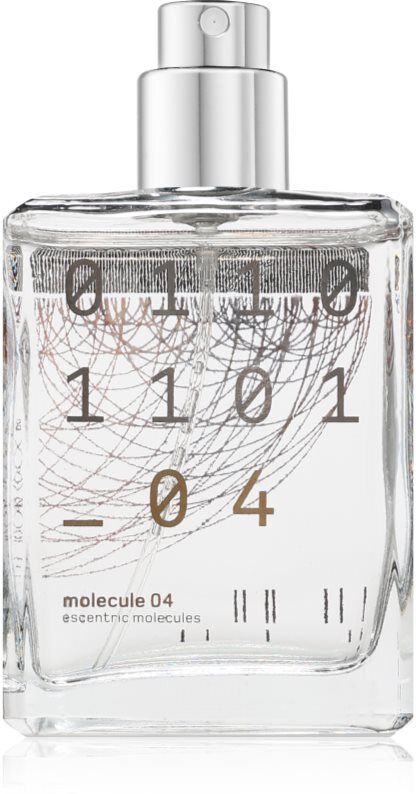
Escentric Molecules Molecule 04 EDT U 30 mlEscentric Molecules Molecule 04, 30 ml, Eaux de Toilette unisex, Discover a fragrance that doesn’t neatly fit into a box and instead brings out your individuality. Escentric Molecules Molecule 04 unisex Eau de Toilette is the right choice when you want to show off your uniqueness. woody fragrance suitable for everyday wear unisex – suitable for both women and men66,30 £*Shipping: 3,99 £Secure redirect to the provider
-
Bielenda Beauty Molecules moisturising cleansing gel 195 gBielenda Beauty Molecules, 195 g, Cleansing for Women, Before you start your regular skincare routine, it is very important to prepare your skin with a thorough cleansing - without it, the following beauty care routine would not be nearly as effective. The BielendaBeauty Molecules cleanser helps to remove all the impurities that have settled on the skin and in the pores throughout the day or overnight, leaving the skin perfectly clean and ready for any further skin treatments. Characteristics: washes the whole face gently and thoroughly hydrates deeply refreshes pleasantly How to use: Apply in the morning and/or evening to a damp face and lather. Then rinse off.6,30 £*Shipping: 3,99 £Secure redirect to the provider
-
Escentric Molecules Escentric 01 EDT U + Case 30 mlEscentric Molecules Escentric 01, 30 ml, Eaux de Toilette unisex, Discover a fragrance that doesn’t neatly fit into a box and instead brings out your individuality. Escentric Molecules Escentric 01 unisex Eau de Toilette is the right choice when you want to show off your uniqueness. woody fragrance floral fragrance musk fragrance suitable for everyday wear unisex – suitable for both women and men59,68 £*Shipping: 3,99 £Secure redirect to the provider
-
Do molecules change during religious prayer?
No, molecules do not change during religious prayer. Religious prayer is a spiritual and mental practice that involves focusing on one's faith, beliefs, and connection with a higher power. It does not involve any physical or chemical changes to molecules in the body. The effects of prayer are often attributed to the psychological and emotional benefits it provides, rather than any direct molecular changes. **
-
'Salts or molecules?'
Salts are compounds formed from the reaction of an acid and a base, while molecules are made up of atoms bonded together. Salts are ionic compounds, meaning they are made up of ions, while molecules can be either ionic or covalent compounds. Salts have a specific crystalline structure and are often soluble in water, while molecules can have a wide range of physical properties and solubilities. Overall, salts and molecules are distinct types of chemical compounds with different structures and properties. **
-
Which of the following molecules are dipole molecules and why?
Molecules that have a dipole moment are considered dipole molecules. A dipole moment occurs when there is an uneven distribution of electron density within a molecule, resulting in a partial positive and partial negative charge. For example, molecules like water (H2O) and ammonia (NH3) are dipole molecules because of their polar covalent bonds, which create a separation of charge within the molecule. On the other hand, molecules like carbon dioxide (CO2) and methane (CH4) are nonpolar and do not have a dipole moment because the electronegativity of the atoms cancel each other out, resulting in a symmetrical distribution of charge. **
-
What is the difference between compound molecules and element molecules?
Compound molecules are made up of two or more different elements chemically bonded together, such as water (H2O) or carbon dioxide (CO2). Element molecules, on the other hand, are made up of two or more atoms of the same element bonded together, such as oxygen (O2) or nitrogen (N2). In compound molecules, the atoms are different, while in element molecules, the atoms are the same. **
Similar search terms for Molecules
-
Escentric Molecules Escentric 05 EDT U Refill 30 mlEscentric Molecules Escentric 05, 30 ml, Eaux de Toilette unisex, Discover a fragrance that doesn’t neatly fit into a box and instead brings out your individuality. Escentric Molecules Escentric 05 unisex Eau de Toilette is the right choice when you want to show off your uniqueness. unique fragrance for a unique personality unisex fragrance69,90 £*Shipping: 3,99 £Secure redirect to the provider
-
Bielenda Beauty Molecules soothing and moisturising serum 30 gBielenda Beauty Molecules, 30 g, Skin Serums for Women, Does it feel as though your skin needs something more than just the care provided by a cream? The Bielenda Beauty Molecules facial serum is the perfect product to enrich your skincare routine – it pampers the skin and delivers an intensive treatment. With its high concentration of active ingredients, the effect it has on your skin is far more pronounced and faster than with a face cream. Its liquid consistency makes application easier, as it is absorbed into the skin very well. Characteristics: hydrates and nourishes effectively brightens restores skin elasticity restores freshness and youthful beauty to your skin Ingredients: contains a minimum of 90% ingredients of natural origin How to use: Dab an appropriate amount of the serum gently into clean skin with your fingertips. Apply to the face, neck and chest.7,00 £*Shipping: 3,99 £Secure redirect to the provider
-
Bielenda Beauty Molecules hydrating face mask with soothing effect 8 gBielenda Beauty Molecules, 8 g, Face Masks for Women, Does it feel as though your skin isn’t quite right and needs something more than just the care provided by a cream? The Bielenda Beauty Molecules face mask is the perfect product to enrich your skincare routine – it pampers the skin and delivers an intensive treatment, bringing about an instant improvement in the skin’s appearance. Characteristics: hydrates deeply and nourishes intensively restores elasticity and a feeling of comfort to skin brightens and freshens How to use: Apply the mask in a thin layer to a cleansed face, avoiding the eye area. Leave to act for the time indicated on the packaging. Then rinse the mask off thoroughly with lukewarm water.1,80 £*Shipping: 3,99 £Secure redirect to the provider
-
HARPERCOLLINS Creative Confidence by Tom & David Kelley – Unleashing Your Creative Potential & Innovation MindsetA powerful and inspiring book from the founders of IDEO, the award-winning design firm, on unleashing the creativity that lies within each and every one of us. Too often, companies and individuals assume that creativity and innovation are the domain of the ‘creative types’. But two of the foremost experts in innovation, design and creativity on the planet show us that each and every one of us is creative. In an entertaining and inspiring narrative that draws on countless stories from their work at IDEO, and with many of the world's top companies and design firms, David and Tom Kelley identify the principles and strategies that will allow us to tap into our creative potential in our work lives, and in our personal lives, allow us to think outside the box in terms of how we approach and solve problems. ‘Creative Confidence’ is a book that will help each of us be more productive and successful in our lives and in our careers.4,95 £*Shipping: 1,99 £Secure redirect to the provider
-
Why are water molecules permanent dipoles and carbon dioxide molecules not?
Water molecules are permanent dipoles because they have a bent molecular shape with unequal sharing of electrons between the oxygen and hydrogen atoms. This results in a partial negative charge on the oxygen atom and partial positive charges on the hydrogen atoms, creating a permanent dipole moment. On the other hand, carbon dioxide molecules are not permanent dipoles because they have a linear molecular shape with symmetrical distribution of the two oxygen atoms and the carbon atom. This results in equal sharing of electrons and no permanent dipole moment. **
-
Why do heptan-1-ol molecules and water molecules not mix?
Heptan-1-ol molecules and water molecules do not mix well because heptan-1-ol is a nonpolar molecule, while water is a polar molecule. Nonpolar molecules are not attracted to polar molecules, so they do not easily mix. Additionally, heptan-1-ol is hydrophobic, meaning it repels water, further preventing the two substances from mixing. This is due to the difference in the polarity and intermolecular forces between the two substances. **
-
How are molecules recognized?
Molecules are recognized through specific interactions between their chemical structures and complementary binding sites on other molecules. This recognition process involves the formation of non-covalent bonds such as hydrogen bonds, van der Waals forces, and electrostatic interactions. The shape, size, and charge distribution of molecules play a crucial role in determining their recognition by other molecules. Additionally, specific functional groups and chemical properties can also contribute to the recognition process. **
-
How are molecules formed?
Molecules are formed through chemical bonding between atoms. Atoms can either share electrons to form covalent bonds or transfer electrons to form ionic bonds. The type of bonding that occurs depends on the elements involved and their tendency to gain, lose, or share electrons. Once atoms are bonded together, they form a stable structure known as a molecule. **
* All prices are inclusive of VAT and, if applicable, plus shipping costs. The offer information is based on the details provided by the respective shop and is updated through automated processes. Real-time updates do not occur, so deviations can occur in individual cases. ** Note: Parts of this content were created by AI.