Buy chance4change.eu ?
We are moving the project
chance4change.eu .
Are you interested in purchasing the domain
chance4change.eu ?
domain@kv-gmbh.de · 0541-91531010
Buy chance4change.eu ?
How does the particle transformation occur in sodium chloride?
In sodium chloride, the particle transformation occurs through ionic bonding. Sodium (Na) atoms lose an electron to become positively charged sodium ions (Na+), while chloride (Cl) atoms gain an electron to become negatively charged chloride ions (Cl-). These oppositely charged ions are then attracted to each other, forming a lattice structure in which the sodium and chloride ions are arranged in a repeating pattern. This results in the formation of sodium chloride crystals. **
What is the resting potential of potassium and sodium?
The resting potential of potassium is approximately -80 millivolts, while the resting potential of sodium is approximately +60 millivolts. These resting potentials are the result of the concentration gradients and selective permeability of the cell membrane to these ions. The difference in resting potentials for potassium and sodium is a key factor in generating the action potential in neurons and other excitable cells. **


Similar search terms for Sodium
Top-Angebote
Products related to Sodium:
-
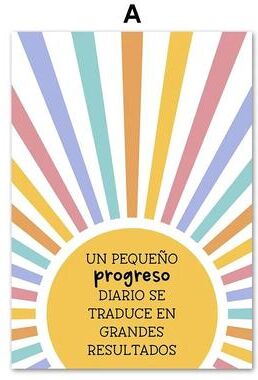
Inspired Finds Growth Mindset Poster Therapy Office Wall Art Social Worker Decor Print positive Progress Rays 19.69x29.53 InCreate a space that inspires growth, reflection, and positivity with this meaningful growth mindset poster designed for professionals who care deeply about impact. Whether you're a counselor, therapist, or educator, this piece adds purpose to your...60,99 $*Shipping: 0,00 $Secure redirect to the provider
-
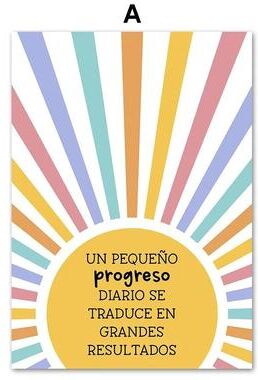
Inspired Finds Growth Mindset Poster Therapy Office Wall Art Social Worker Decor Print positive Progress Rays 11.81x16.54 InCreate a space that inspires growth, reflection, and positivity with this meaningful growth mindset poster designed for professionals who care deeply about impact. Whether you're a counselor, therapist, or educator, this piece adds purpose to your...46,99 $*Shipping: 0,00 $Secure redirect to the provider
-
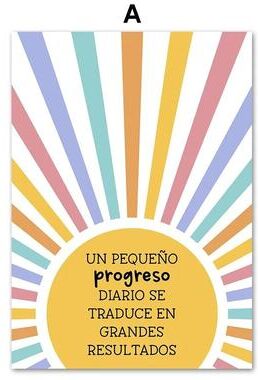
Inspired Finds Growth Mindset Poster Therapy Office Wall Art Social Worker Decor Print positive Progress Rays 19.69x27.56 InCreate a space that inspires growth, reflection, and positivity with this meaningful growth mindset poster designed for professionals who care deeply about impact. Whether you're a counselor, therapist, or educator, this piece adds purpose to your...58,99 $*Shipping: 0,00 $Secure redirect to the provider
-
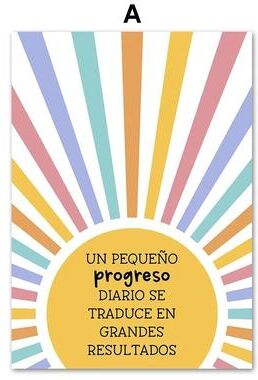
Inspired Finds Growth Mindset Poster Therapy Office Wall Art Social Worker Decor Print positive Progress Rays 11.81x15.75 InCreate a space that inspires growth, reflection, and positivity with this meaningful growth mindset poster designed for professionals who care deeply about impact. Whether you're a counselor, therapist, or educator, this piece adds purpose to your...45,99 $*Shipping: 0,00 $Secure redirect to the provider
-
How much sodium is in sodium bicarbonate?
Sodium bicarbonate, also known as baking soda, is composed of about 27.4% sodium by weight. This means that for every 100 grams of sodium bicarbonate, there is approximately 27.4 grams of sodium. It is important to note that while sodium bicarbonate contains sodium, it is not as high in sodium content as other sodium-based compounds. **
-
How do sodium chloride and sodium chlorate differ?
Sodium chloride and sodium chlorate differ in their chemical composition and uses. Sodium chloride, commonly known as table salt, is a simple ionic compound composed of sodium and chloride ions. It is used as a seasoning and preservative in food, as well as in various industrial processes. On the other hand, sodium chlorate is a chemical compound containing sodium, chlorine, and oxygen. It is used as an herbicide, a bleaching agent, and in the production of chlorine dioxide. Additionally, sodium chlorate is more toxic than sodium chloride and should be handled with care. **
-
Why is the sodium-potassium pump needed during the resting potential?
The sodium-potassium pump is needed during the resting potential to maintain the concentration gradients of sodium and potassium ions across the cell membrane. This pump actively transports three sodium ions out of the cell and two potassium ions into the cell, using ATP as an energy source. This process helps to establish and maintain the negative resting membrane potential, which is essential for the proper functioning of neurons and other excitable cells. Without the sodium-potassium pump, the concentration gradients of sodium and potassium ions would dissipate, leading to a loss of the resting potential and impairing the cell's ability to generate action potentials. **
-
What are the effects of sodium deficiency on the action potential?
Sodium deficiency can have significant effects on the action potential. Sodium is a key ion involved in the depolarization phase of the action potential, and a deficiency can lead to a decrease in the amplitude and speed of action potential propagation. This can result in weakened muscle contractions and impaired nerve signaling, leading to symptoms such as muscle weakness, fatigue, and neurological abnormalities. In severe cases, sodium deficiency can even lead to life-threatening conditions such as seizures and coma. Therefore, maintaining proper sodium levels is crucial for normal action potential function and overall physiological health. **


How can sodium oxide and sodium hydroxide be detected?
Sodium oxide can be detected by performing a flame test, where the compound is heated in a flame and the characteristic yellow color of sodium is observed. Sodium hydroxide can be detected by adding a few drops of phenolphthalein indicator to a solution suspected to contain the compound; a pink color change indicates the presence of sodium hydroxide. Additionally, both compounds can be identified through chemical reactions with specific reagents that produce characteristic precipitates or color changes. **
What is the difference between sodium and sodium fluoride?
Sodium is a chemical element with the symbol Na and atomic number 11, while sodium fluoride is a chemical compound composed of sodium and fluoride ions with the formula NaF. The main difference between the two is that sodium is a pure element, while sodium fluoride is a compound formed by the combination of sodium and fluoride ions. Sodium fluoride is commonly used in toothpaste and water fluoridation to prevent tooth decay, while sodium is a highly reactive metal that is commonly found in salts and other compounds. **
Top-Angebote
Products related to Sodium:
-
HARPERCOLLINS Creative Confidence by Tom & David Kelley – Unleashing Your Creative Potential & Innovation MindsetA powerful and inspiring book from the founders of IDEO, the award-winning design firm, on unleashing the creativity that lies within each and every one of us. Too often, companies and individuals assume that creativity and innovation are the domain of the ‘creative types’. But two of the foremost experts in innovation, design and creativity on the planet show us that each and every one of us is creative. In an entertaining and inspiring narrative that draws on countless stories from their work at IDEO, and with many of the world's top companies and design firms, David and Tom Kelley identify the principles and strategies that will allow us to tap into our creative potential in our work lives, and in our personal lives, allow us to think outside the box in terms of how we approach and solve problems. ‘Creative Confidence’ is a book that will help each of us be more productive and successful in our lives and in our careers.4,95 £*Shipping: 1,99 £Secure redirect to the provider
-
Inspired Finds Growth Mindset Poster Therapy Office Wall Art Social Worker Decor Print positive Progress Rays 8.27x11.81 InCreate a space that inspires growth, reflection, and positivity with this meaningful growth mindset poster designed for professionals who care deeply about impact. Whether you're a counselor, therapist, or educator, this piece adds purpose to your...43,99 $*Shipping: 0,00 $Secure redirect to the provider
-
Inspired Finds Growth Mindset Poster Therapy Office Wall Art Social Worker Decor Print positive Progress Rays 19.69x29.53 InCreate a space that inspires growth, reflection, and positivity with this meaningful growth mindset poster designed for professionals who care deeply about impact. Whether you're a counselor, therapist, or educator, this piece adds purpose to your...60,99 $*Shipping: 0,00 $Secure redirect to the provider
-
Inspired Finds Growth Mindset Poster Therapy Office Wall Art Social Worker Decor Print positive Progress Rays 11.81x16.54 InCreate a space that inspires growth, reflection, and positivity with this meaningful growth mindset poster designed for professionals who care deeply about impact. Whether you're a counselor, therapist, or educator, this piece adds purpose to your...46,99 $*Shipping: 0,00 $Secure redirect to the provider
-
How does the particle transformation occur in sodium chloride?
In sodium chloride, the particle transformation occurs through ionic bonding. Sodium (Na) atoms lose an electron to become positively charged sodium ions (Na+), while chloride (Cl) atoms gain an electron to become negatively charged chloride ions (Cl-). These oppositely charged ions are then attracted to each other, forming a lattice structure in which the sodium and chloride ions are arranged in a repeating pattern. This results in the formation of sodium chloride crystals. **
-
What is the resting potential of potassium and sodium?
The resting potential of potassium is approximately -80 millivolts, while the resting potential of sodium is approximately +60 millivolts. These resting potentials are the result of the concentration gradients and selective permeability of the cell membrane to these ions. The difference in resting potentials for potassium and sodium is a key factor in generating the action potential in neurons and other excitable cells. **
-
How much sodium is in sodium bicarbonate?
Sodium bicarbonate, also known as baking soda, is composed of about 27.4% sodium by weight. This means that for every 100 grams of sodium bicarbonate, there is approximately 27.4 grams of sodium. It is important to note that while sodium bicarbonate contains sodium, it is not as high in sodium content as other sodium-based compounds. **
-
How do sodium chloride and sodium chlorate differ?
Sodium chloride and sodium chlorate differ in their chemical composition and uses. Sodium chloride, commonly known as table salt, is a simple ionic compound composed of sodium and chloride ions. It is used as a seasoning and preservative in food, as well as in various industrial processes. On the other hand, sodium chlorate is a chemical compound containing sodium, chlorine, and oxygen. It is used as an herbicide, a bleaching agent, and in the production of chlorine dioxide. Additionally, sodium chlorate is more toxic than sodium chloride and should be handled with care. **
Similar search terms for Sodium
-
Inspired Finds Growth Mindset Poster Therapy Office Wall Art Social Worker Decor Print positive Progress Rays 19.69x27.56 InCreate a space that inspires growth, reflection, and positivity with this meaningful growth mindset poster designed for professionals who care deeply about impact. Whether you're a counselor, therapist, or educator, this piece adds purpose to your...58,99 $*Shipping: 0,00 $Secure redirect to the provider
-
Inspired Finds Growth Mindset Poster Therapy Office Wall Art Social Worker Decor Print positive Progress Rays 11.81x15.75 InCreate a space that inspires growth, reflection, and positivity with this meaningful growth mindset poster designed for professionals who care deeply about impact. Whether you're a counselor, therapist, or educator, this piece adds purpose to your...45,99 $*Shipping: 0,00 $Secure redirect to the provider
-
Inspired Finds Growth Mindset Poster Therapy Office Wall Art Social Worker Decor Print positive Progress Rays 15.75x19.69 InCreate a space that inspires growth, reflection, and positivity with this meaningful growth mindset poster designed for professionals who care deeply about impact. Whether you're a counselor, therapist, or educator, this piece adds purpose to your...47,99 $*Shipping: 0,00 $Secure redirect to the provider
-
Inspired Finds Growth Mindset Poster Therapy Office Wall Art Social Worker Decor Print positive Progress Rays 7.87x9.84 InCreate a space that inspires growth, reflection, and positivity with this meaningful growth mindset poster designed for professionals who care deeply about impact. Whether you're a counselor, therapist, or educator, this piece adds purpose to your...40,99 $*Shipping: 0,00 $Secure redirect to the provider
-
Why is the sodium-potassium pump needed during the resting potential?
The sodium-potassium pump is needed during the resting potential to maintain the concentration gradients of sodium and potassium ions across the cell membrane. This pump actively transports three sodium ions out of the cell and two potassium ions into the cell, using ATP as an energy source. This process helps to establish and maintain the negative resting membrane potential, which is essential for the proper functioning of neurons and other excitable cells. Without the sodium-potassium pump, the concentration gradients of sodium and potassium ions would dissipate, leading to a loss of the resting potential and impairing the cell's ability to generate action potentials. **
-
What are the effects of sodium deficiency on the action potential?
Sodium deficiency can have significant effects on the action potential. Sodium is a key ion involved in the depolarization phase of the action potential, and a deficiency can lead to a decrease in the amplitude and speed of action potential propagation. This can result in weakened muscle contractions and impaired nerve signaling, leading to symptoms such as muscle weakness, fatigue, and neurological abnormalities. In severe cases, sodium deficiency can even lead to life-threatening conditions such as seizures and coma. Therefore, maintaining proper sodium levels is crucial for normal action potential function and overall physiological health. **
-
How can sodium oxide and sodium hydroxide be detected?
Sodium oxide can be detected by performing a flame test, where the compound is heated in a flame and the characteristic yellow color of sodium is observed. Sodium hydroxide can be detected by adding a few drops of phenolphthalein indicator to a solution suspected to contain the compound; a pink color change indicates the presence of sodium hydroxide. Additionally, both compounds can be identified through chemical reactions with specific reagents that produce characteristic precipitates or color changes. **
-
What is the difference between sodium and sodium fluoride?
Sodium is a chemical element with the symbol Na and atomic number 11, while sodium fluoride is a chemical compound composed of sodium and fluoride ions with the formula NaF. The main difference between the two is that sodium is a pure element, while sodium fluoride is a compound formed by the combination of sodium and fluoride ions. Sodium fluoride is commonly used in toothpaste and water fluoridation to prevent tooth decay, while sodium is a highly reactive metal that is commonly found in salts and other compounds. **
* All prices are inclusive of VAT and, if applicable, plus shipping costs. The offer information is based on the details provided by the respective shop and is updated through automated processes. Real-time updates do not occur, so deviations can occur in individual cases. ** Note: Parts of this content were created by AI.