Buy chance4change.eu ?
We are moving the project
chance4change.eu .
Are you interested in purchasing the domain
chance4change.eu ?
domain@kv-gmbh.de · 0541-91531010
Buy chance4change.eu ?
How does a tuba work?
A tuba works by using a combination of the player's breath and the vibration of the player's lips to create sound. When the player blows air through the mouthpiece, it causes the lips to vibrate, which in turn creates sound waves inside the instrument. The sound waves then travel through the tuba's long, coiled tubing, which amplifies and shapes the sound before it is emitted through the bell at the end of the instrument. The player can change the pitch of the sound by pressing different combinations of valves, which alter the length of the tubing the air travels through. **
Which tuba am I playing?
Without more specific information, it is difficult to determine which tuba you are playing. There are several types of tubas, including the BBb tuba, CC tuba, F tuba, and Eb tuba, each with its own unique characteristics and sound. The type of tuba can often be determined by its size, shape, and the key it is pitched in. If you can provide more details about the tuba, such as its size, shape, and key, it would be easier to identify which tuba you are playing. **


Similar search terms for Tuba
Top-Angebote
Products related to Tuba:
-
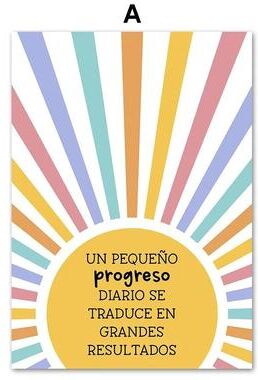
Inspired Finds Growth Mindset Poster Therapy Office Wall Art Social Worker Decor Print positive Progress Rays 11.81x16.54 InCreate a space that inspires growth, reflection, and positivity with this meaningful growth mindset poster designed for professionals who care deeply about impact. Whether you're a counselor, therapist, or educator, this piece adds purpose to your...46,99 $*Shipping: 0,00 $Secure redirect to the provider


-
Is the tuba a brass instrument?
Yes, the tuba is a brass instrument. It is the largest and lowest-pitched instrument in the brass family. The tuba is typically made of brass and produces sound through the vibration of the player's lips on a mouthpiece. It is commonly used in orchestras, concert bands, and brass ensembles. **
-
How do I transpose tuba notes?
To transpose tuba notes, you will need to determine the interval you want to transpose by. For example, if you want to transpose the notes up a whole step, you would move each note up two half steps. You can use a transposition chart to help you with this process. Once you have determined the new notes, you can write them down or play them on your tuba in the new key. Practice transposing regularly to improve your skills in this area. **
-
Does the girl play the tuba?
No, the girl does not play the tuba. **
-
Who are the most famous tuba, horn, and trombone players?
Some of the most famous tuba players include Roger Bobo, Oystein Baadsvik, and Sam Pilafian. Renowned horn players include Dennis Brain, Barry Tuckwell, and Hermann Baumann. As for trombone players, notable names include Joseph Alessi, Christian Lindberg, and J.J. Johnson. These musicians have made significant contributions to their respective instruments and have left a lasting impact on the world of classical music. **


What is potential growth?
Potential growth refers to the maximum rate at which an economy can grow without causing inflation. It is determined by factors such as labor force growth, productivity improvements, and technological advancements. Achieving potential growth is important for sustaining long-term economic prosperity and increasing living standards. Policymakers often aim to implement measures that support potential growth, such as investing in education and infrastructure. **
How does growth progress?
Growth progresses through a series of stages, starting from infancy and continuing through childhood, adolescence, and adulthood. During these stages, individuals experience physical, cognitive, emotional, and social development. Factors such as genetics, environment, nutrition, and experiences all play a role in shaping an individual's growth trajectory. As individuals grow, they acquire new skills, knowledge, and perspectives that contribute to their overall development and well-being. **
Top-Angebote
Products related to Tuba:
-
HARPERCOLLINS Creative Confidence by Tom & David Kelley – Unleashing Your Creative Potential & Innovation MindsetA powerful and inspiring book from the founders of IDEO, the award-winning design firm, on unleashing the creativity that lies within each and every one of us. Too often, companies and individuals assume that creativity and innovation are the domain of the ‘creative types’. But two of the foremost experts in innovation, design and creativity on the planet show us that each and every one of us is creative. In an entertaining and inspiring narrative that draws on countless stories from their work at IDEO, and with many of the world's top companies and design firms, David and Tom Kelley identify the principles and strategies that will allow us to tap into our creative potential in our work lives, and in our personal lives, allow us to think outside the box in terms of how we approach and solve problems. ‘Creative Confidence’ is a book that will help each of us be more productive and successful in our lives and in our careers.4,95 £*Shipping: 1,99 £Secure redirect to the provider
-
Inspired Finds Growth Mindset Poster Therapy Office Wall Art Social Worker Decor Print positive Progress Rays 11.81x16.54 InCreate a space that inspires growth, reflection, and positivity with this meaningful growth mindset poster designed for professionals who care deeply about impact. Whether you're a counselor, therapist, or educator, this piece adds purpose to your...46,99 $*Shipping: 0,00 $Secure redirect to the provider
-
How does a tuba work?
A tuba works by using a combination of the player's breath and the vibration of the player's lips to create sound. When the player blows air through the mouthpiece, it causes the lips to vibrate, which in turn creates sound waves inside the instrument. The sound waves then travel through the tuba's long, coiled tubing, which amplifies and shapes the sound before it is emitted through the bell at the end of the instrument. The player can change the pitch of the sound by pressing different combinations of valves, which alter the length of the tubing the air travels through. **
-
Which tuba am I playing?
Without more specific information, it is difficult to determine which tuba you are playing. There are several types of tubas, including the BBb tuba, CC tuba, F tuba, and Eb tuba, each with its own unique characteristics and sound. The type of tuba can often be determined by its size, shape, and the key it is pitched in. If you can provide more details about the tuba, such as its size, shape, and key, it would be easier to identify which tuba you are playing. **
-
Is the tuba a brass instrument?
Yes, the tuba is a brass instrument. It is the largest and lowest-pitched instrument in the brass family. The tuba is typically made of brass and produces sound through the vibration of the player's lips on a mouthpiece. It is commonly used in orchestras, concert bands, and brass ensembles. **
-
How do I transpose tuba notes?
To transpose tuba notes, you will need to determine the interval you want to transpose by. For example, if you want to transpose the notes up a whole step, you would move each note up two half steps. You can use a transposition chart to help you with this process. Once you have determined the new notes, you can write them down or play them on your tuba in the new key. Practice transposing regularly to improve your skills in this area. **
Similar search terms for Tuba
-
Does the girl play the tuba?
No, the girl does not play the tuba. **
-
Who are the most famous tuba, horn, and trombone players?
Some of the most famous tuba players include Roger Bobo, Oystein Baadsvik, and Sam Pilafian. Renowned horn players include Dennis Brain, Barry Tuckwell, and Hermann Baumann. As for trombone players, notable names include Joseph Alessi, Christian Lindberg, and J.J. Johnson. These musicians have made significant contributions to their respective instruments and have left a lasting impact on the world of classical music. **
-
What is potential growth?
Potential growth refers to the maximum rate at which an economy can grow without causing inflation. It is determined by factors such as labor force growth, productivity improvements, and technological advancements. Achieving potential growth is important for sustaining long-term economic prosperity and increasing living standards. Policymakers often aim to implement measures that support potential growth, such as investing in education and infrastructure. **
-
How does growth progress?
Growth progresses through a series of stages, starting from infancy and continuing through childhood, adolescence, and adulthood. During these stages, individuals experience physical, cognitive, emotional, and social development. Factors such as genetics, environment, nutrition, and experiences all play a role in shaping an individual's growth trajectory. As individuals grow, they acquire new skills, knowledge, and perspectives that contribute to their overall development and well-being. **
* All prices are inclusive of VAT and, if applicable, plus shipping costs. The offer information is based on the details provided by the respective shop and is updated through automated processes. Real-time updates do not occur, so deviations can occur in individual cases. ** Note: Parts of this content were created by AI.